In the first part, this essay aims at providing a rough overview about the most important topics in the literature dealing with alien invasive species. This overview tries to answer questions about the general biology of alien invasive species and the existence of a perfect invader. However, some ecosystems seem to be more susceptible to invasion than others do. General assumptions are that the tropics are less invasible than temperate regions and that islands are more vulnerable than continental areas. An alien species must complete three stages of human-mediated spreading which are transportation, introduction and establishment in order to become invasive. An alien invasive species might then have positive or negative impacts. Either it adds to the species richness or it has detrimental effects on the ecological, economical or human health sector. However, sophisticated treatments are available to prevent several means of introduction. The second part of this essay will provide a critical evaluation about the literature reviewed. There still exists a great deal of uncertainty and variety of opinions within publications. The need of increased prevention of introductions and collaboration are conclusions that can be drawn. Furthermore, public awareness has to be raised and a clear definition of terms is a must. Finally, it is important to recall that many alien species are responsible for human well-being by providing food and aesthetics.

Thumb

0 repins 0 comments

Infant Feeding is about a controversy which fascinated the medical and scientific world, as well as national and international health authorities, politicians, religious groups and consumer organisations, for more than 11 years. It often disturbed public opinion, being concerned, as it is, with nothing less than the life and death of babies. The infant food industry was directly accused of having caused a decline in breast-feeding through the inappropriate marketing of breast milk substitutes. The problem was said to be particularly acute in poor under-developed communities, because illiterate mothers were unable to understand instructions for its use, water was often contaminated and, in order to "stretch" an admittedly expensive product, it was over-diluted. The inevitable result, said the critics of industry, was malnutrition, gastroenteritis and increased infant mortality. These were very serious charges against companies which had until then been generally considered to provide an important contribution to medical progress and child health. One company was to be particularly singled out: Nestlé SA, the Swiss multinational. Perhaps it became the target because it was the longest establishment, and served well as a symbol of the whole industry. It is a story which is full of confrontations, intrigue and passionately-held opinions, based, nevertheless, on a sizeable body of medical science. After countless twists and turns, it has some sort of "happy ending". Yet a great deal remains to be said, as will be seen throughout the book.

Thumb

0 repins 0 comments

Dogs are perhaps our most popular pets, and certainly one of the best-loved of all animals. They are not only humanity's best friend, they are also its oldest: burial sites dating back 12,000 years indicate that dogs moved alongside prehistoric peoples before, during and after both species settled the world. The story of the canine has been fundamentally entwined with that of humanity since the earliest times, and this ancient and fascinating story is told in Susan McHugh's Dog. This book unravels the debate about whether dogs are descended from wolves, and moves on to deal with canines in mythology, religion and health, dog cults in ancient and medieval civilizations as disparate as Alaska, Greece, Peru and Persia, and traces correspondences between the histories of dogs in the Far East, Europe, Africa and the Americas. Dog also examines the relatively recent phenomenon of dog breeding and the invention of species, as well as the canine's role in science fact and fiction; from Laika, the first astronaut, and Pavlov's famous conditioned dogs, through to science fiction novels and cult films such as A Boy and his Dog. Susan McHugh shows how dogs today contribute to human lives in a huge number of ways, not only as pets and guide dogs but also as sources of food in Asia, entertainment workers, and scientific and religious objects. Dog reveals how we have shaped these animals over the millennia, and in turn, how dogs have shaped us.

Thumb

0 repins 0 comments

Revised and expanded edition. Nuclear Disasters and Lessons Learned. A Mother's Response Facts are facts. There have been three nuclear power disasters to date: Three Mile Island in 1979, Chernobyl in 1986, and now Fukushima Daiichi in 2011. and there are many more smaller nuclear accidents and near misses every year. Do we wait for another catastrophic event, or do we act now? Nuclear fallout is a harmful and mysterious tragedy that we can't see, taste, hear, smell or feel. Rather than recoil in fear from Fukushima Daiichi it really only serves to empower us into further action. Ms. Roberson's book is a mother's account of dealing with radioactive fallout from the Fukushima Daiichi disaster, the worst in world history. She speaks to the urgent need for food monitoring, conservation and renewable energy, as radiation from nuclear power is now migrating into our homes and kitchens.

Thumb

0 repins 0 comments

Where everybody knows their name. Whether their dream bar is a comfortable neighborhood joint or a nightclub teeming with entertainment, readers can achieve their goal with this step-by-step guide. They'll learn how to focus their vision for their bar, how to build a business plan, what they need to know about mixology and food service, how to deal with vendors and employees, and everything they need to know about advertising and marketing.

Thumb

0 repins 0 comments

The transformation of the Spanish wine industry over the last 20 years has been astonishing. From a state of very considerable decay it has re-invented itself with great vigour and style. Four decades ago such reputation as the wines of Spain had rested on the declining quality of Sherry and the occasional majestic Rioja towering above the surrounding sea of mediocre, oxidised table wines. "How things have changed!" exclaims Julian Jeffs in the introduction to his valuable The Wines of Spain, the latest addition to Faber and Faber's series of wine books. Over the course of two years Jeffs put in a great deal of intensive research in Spain, travelling the length and breadth of the country, visiting growers and tasting their wines. The effort has paid off in a wealth of engrossing detail. The volume is organised into sections dealing with the main provinces or geographical regions-Aragon, Catalunya, Andalucia and so on-then within those by the individual Denominacion de Origen (DO). Within each DO the leading or most interesting bodegas are profiled, allowing Jeffs to build up a cumulative portrait of the regional characters. Especially evocative are the portions of the book dealing with the ancient and distinguished Sherry houses in Andalucia, many of them of course founded in the 18th or 19th centuries by British or Irish merchants. The account of the great Bodegas Vega Sicilia in Castilla is emblematic of the progress of the entire Spanish wine industry: Producing some of the world's finest wine up to the 1920s, it fell into poor practices and the quality and reliability of the wine suffered badly. Under the modernising current owners the wine has regained its former reputation. According to Julian Jeffs, Vega Sicilia "is on a Wagnerian scale, with all that master's subtlety and complexity." -Robin Davidson -This text refers to an out of print or unavailable edition of this title.

Thumb

0 repins 0 comments

At a time when it is clear that climate change adaptation and mitigation are failing, this book examines how our assumptions about (valid and usable) knowledge are preventing effective climate action. Through a cross-disciplinary, empirically-based analysis of climate science and policy, the book situates the failures of climate policy in the cultural history of prediction and its interfaces with policy. Fava calls into question the current interfaces between scientific research and climate policy by tracing multiple connections between modelling, epistemology, politics, food security, religion, art, and the apocalyptic. Demonstrating how the current domination of climate policy by models and scenarios is part of the problem, the book examines how artistic practices are a critical location to ask questions differently, rethink environmental futures, and activate social change. The analysis starts with another moment of climatic change in recent western history: the overlap of the Little Ice Age and the "scientific revolution," during which intense climatic, scientific and political change were contemporary with mathematical calculation of the apocalypse. Dealing with the need for complex answers to complex and urgent questions, this is essential reading for those interested in climate action, interdisciplinary research and methodological innovation. The empirical analyses amount to a methodological experiment, across history of science, theology, art theory and history, architecture, future studies, climatology, computer modelling, and agricultural policy. This book is a major contribution to understanding how we are precluding effective climate action, and designing futures that resemble our worst nightmares.

Thumb

0 repins 0 comments

1. The Characteristics of a Puggle Puppy and Dog 2. What You Should Know About Puppy Teeth 3. How to Select Treats To Train Your Dog With 4. Some Helpful Tips for Raising Your Puggle Puppy 5. Are Rawhide Treats Good for Your Puggle? 6. How to Crate Train Your Puggle 7. When Should You Spay Or Neuter Your Dog? 8. When Your Puggle Makes Potty Mistakes 9. How to Teach your Puggle to Fetch 10. Make it Easier and Healthier for Feeding Your Puggle 11. When Your Puggle Has Separation Anxiety, and How to Deal With It 12. When Your Puggle Is Afraid of Loud Noises 13. How to Stop Your Puggle from Jumping Up On People 14. How to Build A Whelping Box for a Puggle or Any Other Breed of Dog 15. How to Teach Your Puggle to Sit 16. Why Your Puggle Needs a Good Soft Bed to Sleep In 17. How to Stop Your Puggle from Running Away or Bolting Out the Door 18. Some Helpful Tips for Raising Your Puggle Puppy 19. How to Socialize Your Puggle Puppy 20. How to Stop Your Puggle Dog from Excessive Barking 21. When Your Puggle Has Dog Food or Toy Aggression Tendencies 22. What you should know about Fleas and Ticks 23. How to Stop Your Puggle Puppy or Dog from Biting 24. What to Expect Before and During your Dog Having Puppies 25. What the Benefits of Micro chipping Your Dog Are to You 26. How to Get Something Out of a Puppy or Dog's Belly without Surgery 27. How to Clean Your Puggle's Ears Correctly 28. How to Stop Your Puggle from Eating Their Own Stools 29. How Invisible Fencing Typically Works to Train and Protect Your Dog 30. Some Items You Should Never Let Your Puppy or Dog Eat 31. How to Make Sure Your Dog is eating a Healthy Amount of Food 32. Make it Easier and Healthier for Feeding Your Puggle 33. How to Clean and Groom your Puggle 34. How to Trim a Puppy or Dogs Nails Properly 35. The 5 Different Kinds of Worms that can harm your Dog and more.

Thumb

0 repins 0 comments

This book is intended to equip you with the necessary skills to curb emotional eating in 30 days. You will learn heathier alternatives that can help you deal with the negative feelings that trigger your cravings for unhealthy food whenever you are emotionally distressed. There is, indeed, hope for emotional eaters.

Thumb

0 repins 0 comments

Living with a peanut allergy is hard, and peanuts are everywhere! Ben ate peanut butter when he was young and he had a bad allergic reaction. At first he was too scared to speak up about his allergy and tell people that he couldn't be around peanuts. Now at six years old, he knows that speaking up is very important, since he encounters food with peanuts at school, at T-ball practice, at birthday parties, and during the holidays. Because Ben's friends and family care about him, they are always understanding of his condition and are happy to put away dangerous foods if Ben asks them to. The Peanut Pickle will help children learn how to tell others about a food allergy and explain that they need a safe environment. It will teach them how to deal with difficult and awkward situations that inevitably arise when a child has a life-threatening food allergy. It also includes a guide for parents to help their children with food allergies.

Thumb

0 repins 0 comments

A practical guide to optimize profit in the food service industry. Whether you have a cupcake business or a restaurant. This book will take a look at some of the most important elements when it comes to costs and profits in the food service industry and how to deal with it. Written from a practical point of view, everything in this book can be put to practice right away. Dealing with elements like: labor cost, food cost, beverage cost, menu engineering and capacity management. this book will set a good basis for managers who want to optimize their business' performance.

Thumb

0 repins 0 comments

Advances in Radiation Biology, Volume 10, provides an overview of the state of knowledge in the field of radiation biology. The book contains seven chapters and opens with a study on DNA repair phenomena that have been explored through the use of viruses as probes. This is followed by separate chapters on the behavior of the long-lived synthetic elements and their natural analogs in food chains; the physical and clinical basis for the use of ultrasound to induce local hyperthermia in human tumors; and the role of pH changes in the etiology of thermal cell killing and the potential of low pH as an adjuvant to hyperthermia. Subsequent chapters deal with the effects of accelerated heavy charged particles on various normal tissue systems; the effect of ionizing radiations on connective tissue; and solid tumor response to combined radiotherapy and chemotherapy.

Thumb

0 repins 0 comments

The answer "no" is unacceptable to Marie Pizano in her quest of life. In her memoir, From Barefoot to Stilettos, she tells the story of her life thus far. She vividly recounts her experiences from childhood days, living on food stamps, learning the ways of local gangs, and double-dutching on the streets of south-side Chicago. Brilliantly, she shares the inspirational tale of her survival of a life-changing motorcycle accident and her perseverance to keep moving forward despite the odds she faced. She reveals, in complete honesty, the feelings and struggles she faced when she moved to Memphis to live as a trophy-wife life - dealing with everything from the mean girls, the monster-in-law, and the panic attacks, to becoming a mother, her post-divorce years, and defeating the odds by building an entertainment powerhouse - all while rediscovering herself, her life, and her power. Through explorations of her own past, present, and potential future, Marie reflects on how the sum of her trials and triumphs have shaped her into the empowered woman she has become in her incessant quest to find her "yes." There is a powerful message here for other women - or anyone, for that matter -in situations that are less than ideal; you can always find your "yes," no matter what happens in your life. You can survive! You have a choice - you can either play the victim, or you can do something about it; even when you are at your absolute lowest, there is still a flicker of light that can ignite you. You can stand tall again and walk proudly in your stilettos with truth and integrity; sometimes, you just have to fight for it - life is not for sissies.

Thumb

0 repins 0 comments

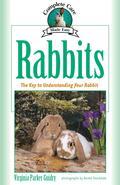
A Complete Care Made Easy guide to the irresistible rabbit-that big-eared super pet that is cuddly, quiet, full of personality, affordable really cute and really soft," in the inspired words of author Virginia Parker Guidry. Illustrated with the beautiful photography of Reneé Stockdale, Rabbits begins with a fun chapter on the history beginning with the European wild rabbit, the only species ever to be domesticated, which led to all of our modern-day breeds and varieties of pet rabbit. This guide offers practical advice on choosing the right rabbit for a newby to rabbits, addressing responsibilities, costs, and available breeds as well as sex, size, and personality types. The author gives the reader much to consider, especially when one considers there are 45 different breeds of beautiful bunnies recognized by the American Rabbit Breeders Association. The acquisition of a healthy rabbit from a breeder, shelter, or pet shop is discussed in the chapter Adopting a Rabbit," and the future keeper's home preparations are encapsulated in Preparing for a Rabbit," wherein the author discusses indoor and outdoor housing and safety, family introductions, healthful food options, and rabbit supplies. As with all editions in the Complete Care Made Easy series, Rabbits offers the full range of care required to keep a pet happy and healthy, and the chapter The Best of Care" includes feeding guidelines, grooming tips, handling, training, cleanliness, and travel advice. The health of the rabbit is of paramount concern to the keeper, and the author's text covers preventive care, veterinary selection, vaccinations, spaying/neutering, dealing typical rabbit health problems, old-age care, and first aid. For keepers who want to understand their rabbits more fully, Think Like a Rabbit" is a fascinating look into rabbit behavior, language, and potential behavioral issues (such as chewing, biting, and scratching). The expression breeding like rabbits" is based in pure biology, and rabb

Thumb

0 repins 0 comments

Keeping and Breeding Aquarium Fishes deals with the aquarium as a going concern, on the factors which enter into the maintenance of this state, and on fish breeding. Cold-water and goldfish enthusiasts may complain that the tropicals seem to get an overweight share of the text. This is because they need it. This book is not concerned with fancy varieties or show standards, except so far as they need special conditions for maintenance or breeding. The book opens with a chapter on the elements of a balanced aquarium, covering tanks, plants, and aquarium snails. This is followed by separate chapters on anatomy and physiology of fishes, fish foods and feeding, the principles of aquarium keeping, the process of setting up a tank, lighting and heating; and the aeration, filtration, and circulation of the water. Subsequent chapters deal with and aquarium rooms with breeding batteries; the breeding of livebearers, egg scatterers, anabantids, and cichlids; types of fish disease, and keeping saltwater fishes.

Thumb

0 repins 0 comments

Most of the anti-cancer drugs in use today were discovered by happy accident rather than design, yet the rational design of better anti-cancer drugs remains a cherished goal, and one of the most important challenges facing medical science. This book represents a compilation of views and progress reports which illustrate the diversity of approaches to the problem. Recent research has confirmed the belief that critical genetic changes are at work in cancer cells. The genome, then (DNA in biochemical terms), surely represents a critical target for specific chemotherapy of cancer, and several chapters address the issue of attacking DNA, gene targetting, and the like. Others deal with principles of rational design, exploitation of novel modalities and targets, or the nuts and bolts of antitumour drug testing. While no attempt has been made to provide a comprehensive coverage of this wide-ranging and vitally important subject, the present volume in the series will provide much food for thought.

Thumb

0 repins 0 comments

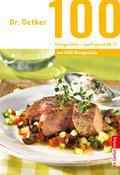
Mmmmh…wie das duftet!" Wenn das kein guter Deal ist: gleich 100 Rezepte für sanftes Garen und das dann noch mit dem Dr. Oetker-Rundum-Sicherheits-Gefühl, denn alle Rezepte sind mit ca. 85 Fotos ausführlich dargestellt, verständlich geschrieben und verlässlich getestet. Sanft Garen gelingt im Ofen ohne Probleme - probieren Sie es doch gleich mal aus! Alle Geschmacksrichtungen finden Sie zusammengefasst in der Printversion 1000 Ofengerichte"- dieses Kapitel ist eines von zehn Auszügen.

Thumb

0 repins 0 comments

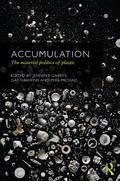
From food punnets to credit cards, plastic facilitates every part of our daily lives. It has become central to processes of contemporary socio-material living. Universalised and abstracted, it is often treated as the passive object of political deliberations, or a problematic material demanding human management. But in what ways might a 'politics of plastics' deal with both its specific manifestation in particular artefacts and events, and its complex dispersed heterogeneity? Accumulation explores the vitality and complexity of plastic. This interdisciplinary collection focuses on how the presence and recalcitrance of plastic reveals the relational exchanges across human and synthetic materialities. It captures multiplicity by engaging with the processual materialities or plasticity of plastic. Through a series of themed essays on plastic materialities, plastic economies, plastic bodies and new articulations of plastic, the editors and chapter authors examine specific aspects of plastic in action. How are multiple plastic realities enacted? What are their effects? This book will be of interest to students and scholars of sociology, human and cultural geography, environmental studies, consumption studies, science and technology studies, design, and political theory.

Thumb

0 repins 0 comments

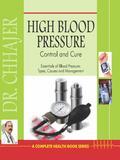
Yes, you can outsmart hypertension. It is a leading cause of heart attack, kidney disease, stroke, blindness etc. This book shows you how you can control hypertension by staying active, eating a variety of healthy foods and taking prescribed medicines. These are the keys to bring BP down and keeping it there. Reading this book will ensure that consequences of Hypertension are strongly influenced by YOU. An ideal manual for hypertensive and their families to best deal with the menace.

Thumb

0 repins 0 comments

This is one of ten eBooks on the commercial production of ornamental fish. It is based predominantly on the author's 30 years of experience, mostly on his own farms. While a few of the eBooks are purely commercial, others, particularly those on breeding, will also be helpful to hobbyists, understandable even by beginners. The following description is provided as a guide. PART 3 gives extremely detailed and comprehensive, but understandably written methods for all stages of breeding the egg-scatterers - usable even by beginners! It tells how to hold and condition breeders (including diets), set them up for spawning, detect eggs, look after larvae, give the first feed (with food options), raise fry, maintain water quality, deal with health issues etc. This section is based on the egg-scatterers, but is also used as a technique guide and reference for all other species because there is so much common ground between them. Strongly recommended in conjunction with PART 4, for both hobbyist and commercial breeders.

Thumb

0 repins 0 comments

Next Page