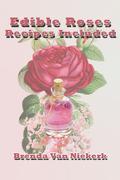
Roses are edible and this book will show you how to use roses for culinary purposes. The Book Will Deal With The Following: Candied Rose petals Rose flavored cakes, cookies, tarts, candy, ice cream and desserts Rose hip tea Rose jams and jellies Rose sugar and spice Rose syrups Rose water Rose tisanes Rose oil

Thumb

0 repins 0 comments

The Cape Winemakers Guild (CWG) - founded in 1982 and celebrating its 30th anniversary in 2012 - is an association of South Africa's top winemakers, committed to maintaining and constantly improving the quality of their wines, thereby serving as role models for the Cape wine industry as a whole to uphold and build on the reputation of South African wine globally. This coffee table book primarily focuses on the winemakers and their thoughts, opinions and philosophies on all things to do with wine, from the growing, making and enjoyment of it, to its integral role - past, present and future - in the culture and lifestyle of the Cape and South Africa. Beautifully written by Wendy Toerien, the text is both lighthearted and entertaining as well as evocative and informative. Each of the 45 Guild members is featured in a profile piece that includes anecdotes, insights and experiences of a life with food and wine. Also included are two of each winemaker's favourite recipes, matched with one (or more) of his (or her) top wines. Sections dealing with the history of the CWG (interwoven with its role in leading Cape wine industry developments and initiatives); the workings of the CWG and its members (the philosophy of the traditional role of a guild as a touchstone for artisanal excellence); and the activities of the CWG (including the annual, internationally prestigious auction of selected members' wines and social responsibility programmes such as the Development Trust to mentor new young winemakers from previously disadvantaged backgrounds and school funding) are another feature of this celebration of the Guild and its members.

Thumb

0 repins 0 comments

Religious faith and reason are curious psychological phenomena. This book explores their philosophical aspects. To me, doubt seems more reasonable than certainty. Open-mindedness seems more reasonable than fixed belief. Doubt and open-mindedness are often mistaken for confusion, though. Also, like certainty and faith, they can be taken to extremes. Without the restrictions of faith, the mind has an amazing universe of ideas to explore, and no part of it is off limits. Just try to avoid getting stuck some place. It seems that all our efforts to understand God and His ways have come to total zero. We don't really know anything about God, and those who think they do are fooling themselves, and others. In the future, our knowledge may double many times, but it will still be zero. Count me in with the permanent Agnostics. There are billions of believers in the world, and they believe all kinds of different things. Usually the same ideas that were drummed into their heads as children. All of them think that their little village is the one that got all the answers right. The fact that they won't change their beliefs is no indication that any of them are right. It only shows that they are not thinking for themselves.A great deal of recent literature has been devoted to the religious instinct. One wonders why we evolved with an instinct that causes us to wear impractical clothing, refuse to eat certain foods, and devote a lot of energy to nonproductive activities. I hesitate to say that we are ready as a species to abandon the religious instinct. It gives us a sense of community. Along with this is a tendency toward charity, empathy and tolerance, toward those in our community. The other side of the coin is that the sense of community can turn into an us-and-them mentality, making us hostile, fearful, vicious and hateful toward "them." We have had many wars due to religious hatred. We also have great charities inspired by religious feelings. We abandon religious superstition at o

Thumb

0 repins 0 comments

If you've ever wished you could just stop. - drinking - eating - smoking - gambling - shopping (pick one) For anyone struggling to break the cycle of addiction comes the groundbreaking approach from The Chopra Center, the world-renowned facility that has successfully helped thousands of people change their lives for the better. Chopra Center cofounder and medical director David Simon, M.D, and bestselling author and personal-growth expert Deepak Chopra outline their revolutionary approach-one that defies outmoded beliefs about recovery, particularly that people 'are' their addictions or that they are powerless to control them. By integrating the best of Western research with Eastern traditions, Simon and Chopra give anyone the tools to uncover the true cause of their addiction and provide comprehensive steps to end it for good. Readers will discover how to: - Recognize the purpose their habit serves and how to fill the void - Identify triggers and avoid relapse - Deal with disappointments, insecurities, or anger in ways that provide lasting relief, not a temporary high - Use meditation to counter stress - Choose foods and supplements that will detoxify the body and curb cravings By following the path thousands have used to turn their lives around, now anyone can have access to the renowned Chopra Center's program to achieve lasting freedom from addiction.

Thumb

0 repins 0 comments

Have fun training and understanding your Shih Tzu dog with these fun tips to read! 1. The Characteristics of a Shih Tzu Puppy and Dog 2. What You Should Know About Puppy Teeth 3. Some Helpful Tips for Raising Your Shih Tzu Puppy 4. Are Rawhide Treats Good for Your Shih Tzu? 5. How to Crate Train Your Shih Tzu 6. When Should You Spay Or Neuter Your Dog? 7. When Your Shih Tzu Makes Potty Mistakes 8. How to Teach your Shih Tzu to Fetch 9. Make it Easier and Healthier for Feeding Your Shih Tzu 10. When Your Shih Tzu Has Separation Anxiety, and How To Deal with It 11. When Your Shih Tzu Is Afraid of Loud Noises 12. How to Stop Your Shih Tzu from Jumping Up On People 13. How to Build a Whelping Box for a Shih Tzu or Any Other Breed of Dog 14. How to Teach Your Shih Tzu to Sit 15. Why Your Shih Tzu Needs a Good Soft Bed to Sleep In 16. How to Stop Your Shih Tzu from Running Away or Bolting Out the Door 17. Some Helpful Tips for Raising Your Shih Tzu Puppy 18. How to Socialize Your Shih Tzu Puppy 19. How to Stop Your Shih Tzu Dog from Excessive Barking 20. When Your Shih Tzu Has Dog Food or Toy Aggression Tendencies 21. What you should know about Fleas and Ticks 22. How to Stop Your Shih Tzu Puppy or Dog from Biting 23. What to Expect Before and during your Dog Having Puppies 24. What the Benefits of Micro chipping Your Dog Are to You 25. How to Get Something Out of a Puppy or Dog's Belly without Surgery 26. How to Clean Your Shih Tzu's Ears Correctly 27. How to Stop Your Shih Tzu from Eating Their Own Stools 28. How Invisible Fencing Typically Works to Train and Protect Your Dog 29. Some Items You Should Never Let Your Puppy or Dog Eat

Thumb

0 repins 0 comments

The world of law enforcement and criminal justice in the South during the Jim Crow Era was vastly different than it is today, and segregation was especially difficult for black police officers who were challenged to enforce laws. William J. Day was one of the first 10 African American police officers in Savannah, GA. His story is one of courage, fortitude and dedication to his career and his family. In May, 1947, he joined the Savannah police department. In those days of segregation, severe limits were placed on black law enforcement officers. There were segregated drinking fountains in precinct stations. Black policemen were allowed to patrol only in black communities, and had to call in a commander if they arrested a white suspect. White officers would steam-clean the seats of their police cruisers after black officers had driven them. "The black officers were reduced to automatic civilian status when they walked off the job," recalls his son, Charles E. Day, Sr. "My father had to deal with it, plus keep a job and raise a family." William and Laura raised a family of four sons, one of whom was an invalid. Laura had studied nursing, but gave up her career to care for her family. She was always home for her children and the home was always filled with friends and good food. William J. Day, Sr. passed away in April 1972, just shy of his 60th birthday. As his son Charles approached his own 60th birthday, he wanted to memorialize the legacy of his father and pay tribute to a remarkable man. This book is written about this father's life and his family. The Tenth Man: Living in Black and Blue tells the story of this era in Southern history, the city of Savannah, GA, the civil rights movement and the lives of people who endured these hardships.

Thumb

0 repins 0 comments

The epic voyage of the Pathfinder Ship Pegasus continues. After discovering the marvelous ancient technology of the Starlock - a gigantic space station facilitating instant transport across thousands of light years - the crew of Pegasus travels to Aurora, a planet whose intense magnetic fields produce a sky that is a constant blaze of auroras. The major industries of the planet Aurora are pornography, arms dealing, and snack foods. Also, the planet hides a dark and terrible secret that will almost certainly lead to its complete destruction.

Thumb

0 repins 0 comments

RAMAYANA: THE GAME OF LIFEBOOK 1ONE OF THE WORLD'S GREAT LITERARY MASTERPIECES, SKILLFULLY RETOLD FOR MODERN AUDIENCESEpics like the Ramayana have been recounted infinite times. Is there a need for another chronicle in the presence of so many? How is this one different? And is it relevant to our ever-changing modern lives? Yes, there is a need; yes, this is different; and yes, it is most relevant! This new series of books, each following one khand of the Ramayana, decodes the eternal wisdom of that poetic scripture through gripping narrative and thought-provoking instruction. In the time-honored custom of spreading wisdom through tales, every fascinating story in the epic is retold here and every character unfolded to captivate your heart and open your mind to life's deepest questions. The narrative closely follows Valmiki's Ramayana, gently weaving in folk tales as well as the beautiful analogies of the Kamba Ramayana. The first of this six-volume series, Rise of the Sun Prince, takes you through the divine story of Lord Rama from His birth up to His marriage. Through these pages are revealed the tales of Dasaratha's leadership, Vishwamitra's quest for power and the intriguing story of a little-known stone maiden. Ramayana: The Game of Life has all of this and much more food for contemporary thought drawn from an enduring masterpiece. Shubha Vilas, a spiritual seeker and a motivational speaker, holds a degree in engineering and law with specialization in Patent Law. His leadership seminars are popular with top-level management in corporate houses. He also helps individuals deal with modern-life situations by applying the teachings of the Bhagavad Gita, Ramayana and other dharmic traditions.

Thumb

0 repins 0 comments

While everyone is talking about "big data," the truth is that understanding the "little data" (stock reports, newspaper headlines, weather forecasts, etc.) is what will help you make smarter decisions at work, at home, and in every aspect of your life. The average person consumes approximately 30 gigabytes of data every single day, but has no idea how to interpret it correctly. Everydata explains, through the eyes of an expert economist and statistician, how to correctly interpret all of the small bytes of data we consume in a day. Readers will become effective, skeptical consumers of everyday data. Everydata is filled with countless examples of people misinterpreting data-oftentimes with catastrophic results: Millions of women avoid caffeine during pregnancy because they interpret correlation as causation The initial launch of HealthCare.gov failed in part because key decision-makers couldn't observe all of the data A baby food company was investigated by the Federal Trade Commission for cherry picking data Attorneys faced a $1 billion jury verdict because of outlier data The Space Shuttle Challenger exploded because the engineers were dealing with a limited sample set Hedge fund companies claim they can make smarter predictions-but the market data says otherwise. Each chapter of Everydata highlights one commonly misunderstood data concept, using both real-world and hypothetical examples from a wide range of topics, including business, politics, advertising, law, engineering, retail, parenting, and more. Readers will get the answer to the question, "Now what?", along with concrete ways they can use this information to immediately start making smarter decisions, today and every day.

Thumb

0 repins 0 comments

Nourishing: Recipes and Reflections on Recovery combines over 75 delicious recipes from around the world with heartfelt, honest and thought-provoking stories about the role food can play in the journey to recovery from illness. Nutritionist and cook Helen Ashwell reminds us how the smell, taste and texture of food can rekindle a forgotten memory. In Nourishing, snapshots of memories from staff, service users, patients and carers of Nottinghamshire Healthcare NHS Trust sit alongside the recipes, and highlight the importance of food, family, cultures and traditions in our lives. Handing down family recipes can generate feelings of belonging, warmth, love and acceptance among families and friendship groups. Beautifully illustrated throughout by food photographer Dick Makin, Nourishing promotes an interest in home-cooked food whilst offering insight into how people deal with personal adversity. Nourishing aims to raise awareness, reduce stigma and celebrate positive strategies for people with mental and physical health issues. Nourishing also reminds us that food can be a comfort: something that is vital for life and for living, but which is also connected to contentment, delight and nourishment of body and soul. The pleasure comes not just from eating, but from preparation and cooking. Michelin starred chef, Sat Bains, endorses the book by recognising the value of wholesome, home-cooked food and family support. He comments: "The routine of preparing and sharing food together goes further than nutrition. It brings a sense of balance into life.

Thumb

0 repins 0 comments

This book presents an up-to-date, detailed and thorough review of the most fascinating ecological findings of bird migration. It deals with all aspects of this absorbing subject, including the problems of navigation and vagrancy, the timing and physiological control of migration, the factors that limit their populations, and more. Author, Ian Newton, reveals the extraordinary adaptability of birds to the variable and changing conditions across the globe, including current climate change. This adventurous book places emphasis on ecological aspects, which have received only scant attention in previous publications. Overall, the book provides the most thorough and in-depth appraisal of current information available, with abundant tables, maps and diagrams, and many new insights. Written in a clear and readable style, this book appeals not only to migration researchers in the field and Ornithologists, but to anyone with an interest in this fascinating subject* Hot ecological aspects include: various types of bird movements, including dispersal and nomadism, and how they relate to food supplies and other external conditions * Contains numerous tables, maps and diagrams, a glossary, and a bibliography of more than 2,700 references* Written by an active researcher with a distinguished career in avian ecology, including migration research

Thumb

0 repins 0 comments

The Search for Good Wine is a highly entertaining and informative book on all aspects of wine and its consumption by nationally-syndicated wine columnist John Hailman, author of the critically-acclaimed Thomas Jefferson on Wine (2006). Hailman explores the wine-drinking experiences and tastes of famous wine-lovers from jolly Ben Franklin and the surprisingly enthusiastic George Washington to Julius Caesar, Sherlock Holmes, and Ernest Hemingway among numerous other famous figures. Hailman also recounts in fascinating detail the exotic life of the founder of the California wine industry, Hungarian Agoston Haraszthy, who introduced Zinfandel to the U.S.Hailman gives calm and reliable guidance on how to deal with snobby wine waiters and how to choose the best wine books and travel guides. He simplifies the ABCs of wine-grape types from the delicate pinot noirs of Oregon to the robust malbecs of Argentina and from the vibrant new whites of Spain to the great reds (old and new) of Italy. The entire book is dedicated to finding values in wine. As Hailman says, "Everyone always wants to know one basic thing: How can you get the best possible wine for the lowest possible price?" His new book is highly practical and effective in answering that eternal question and many more about wine.A judge at the top international wine competitions for over thirty years, Hailman examines those experiences and the value of "blind" tastings. He gives insightful tips on how to select a good wine store, how to decipher wine labels and wine lists, and even how to extract unruly champagne corks without crippling yourself or others. Hailman simplifies wine jargon and effectively demystifies the culture of wine fascination, restoring the consumption of wine to the natural pleasure it really should be.

Thumb

0 repins 0 comments

LOVING THE GRINGO, A BICULTURAL LIFE describes a special, long and loving relationship, through real life anecdotes. The first time I laid eyes on my Gringo, he was doing the "twist," and I learned about the US "native" dance of the times. He resisted embracing my love for the opera, but did become enamored of our language, our way of life, and our food! Light, funny, and unexpected, these stories morror the lives and adventures of husbands, wives, parents, children, grandparents, friends and colleagues, as they cope with multicultural challenges. LOVING THE GRINGO affords the American reader a charming view of one couple's unique marriage, here in the States and in the Republic of Uruguay. The reader is continually captivated by the progression of their lives and their varied experiences. It is a "must read" for all ages, giving one a feeling of "I am so glad I read that!" Upon finishing the last paragraph the words of the eldest granddaughter, at five, echo in my ears: "I love their life!" Arch Manning, Retired Educator and another Gringo husband. LOVING THE GRINGO can also provide a unique resource for educators of multicultural studies. The acquisition of Spanish by my Gringo, makes a perfect case for the communicative approach. An additional resource is a short skit about a visit by some Gringa girls to Uruguay, and their experiences through the Christmas holiday celebrations. As an ESOL practitioner, I have spent hours looking for reading materials dealing with American cultural confusions. Many books I have perused have been the "multicultural" reader type with stories about Eskimos, Native Americans, Chinese, or stories about famous Americans. ESOL students want to read stories that give them insights into the American culture they have to deal with. Patricia Peabody, Retired Adult ESOL Instructor.

Thumb

0 repins 0 comments

Leguminous crops have been found to contribute almost 27% of the world's primary crop production. However, due to environmental fluctuations, legumes are often exposed to different environmental stresses, leading to problems with growth and development, and ultimately, decreased yield. This timely review explains the transcriptomics, proteomics, genomics, metabolomics, transgenomics, functional genomics and phenomics of a wide range of different leguminous crops under biotic and abiotic stresses, and their genetic and molecular responses. Amongst others the text describes the effect of nutrient deficiency, pesticides, salt, and temperature stress on legumes. Importantly, the book explores the physiobiochemical, molecular and omic approaches that are used to overcome biotic and abiotic constraints in legumes. It looks at the exogenous application of phytoprotectants; the role of nutrients in the alleviation of abiotic stress; and the microbial strategy for the improvement of legume production under hostile environments. Key features: demonstrates how to mitigate the negative effect of stress on leguminous crops, and how to improve the yield under stress the most up-to-date research in the field written by an international team of active researchers and practitioners across academia, industry and non-profit organisations This volume is a valuable and much-needed resource for scientists, professionals and researchers working in plant science, breeding, food security, crop improvement and agriculture worldwide. In universities it will educate postgraduate and graduate students in plant science and agriculture; it will also benefit those in scientific institutions and in biotech and agribusiness companies, who deal with agronomy and environment.

Thumb

0 repins 0 comments

A wealthy madam who was known from San Francisco to Victoria in the early part of the 20th century, Stella Carroll was glamorous, worldly and determined to succeed. Her bordellos were fashionably decorated and patronized by the affluent and the powerful; she offered the best of everything-fine food and wine, cigars, entertainment and, of course, girls. The author, with the cooperation of Stella's family in California and New Mexico, has provided an intimate portrait of this infamous, unrepentant woman, her business and her tenuous relationships with double-dealing politicians and corrupt police, whose cooperation was essential to her success in the shadowy world she inhabited. Stella was a woman of contrasts. Her scandalous lifestyle and fiery temper often landed her in court on morals charges, yet she was devoted to and supportive of her family and gave generously to orphans and charities. This compelling non-fiction narrative is a fascinating look at Stella's life and at how things were in Victoria 100 years ago.

Thumb

0 repins 0 comments

This is a compelling story of the multiple woes that befall a precocious and desperately lonely child growing into adulthood in a world devoid of tolerable toilet facilities. It deals with a very real, admittedly unpleasant, problem that plagues human existence in the underdeveloped world. It is a manifest law of nature that what goes into the stomach must come out, sooner or later, as body waste. But what happens where bearable, basic facilities for discharging this excrement are nonexistent? Amfriyie, our tragic hero, grew up in a world where there were absolutely no dignifying alternatives to the loathsome pit latrine. Following his first experience of its degradation, he swore to never again USE one. But as his only remaining option of resorting to hidden corners in the open air proved to be increasingly untenable, his life quickly became a virtual battleground between needing to eat and refusing to eat sufficiently. The inflexible Amfriyie became terribly alone. Solidarity and sympathy were scant in a world where everyone except him managed to make a virtue of necessity of the detestable pit latrine. When Amfriyie was but six years old, his fortuitous but tragic exposure to a neighborhood girl of his dreams while he was defecating in a hideout cost him staggeringly painful emotional anguish and isolation. In primary school, his inclination to eat as little as possible in order to lessen the trials and tribulations attendant on putting food in the stomach pushed him to the edge of physical collapse. During his high school years, bowel problems resulted in the rupture and tragic termination of his relationship to a sweetheart who alone had shielded him from the suffocating solitariness of his life. In his university years and thereafter, his commitment to redemptive politics geared toward reconstruction and modernization of society away from entrenched primitive conditions earned him powerful enemies who contrived his untimely assassination. The ubiquit.

Thumb

0 repins 0 comments

There is a better way to feed your baby. Super Nutrition for Babies gives parents the latest science-verified nutritional recommendations for feeding their child. Based on a program used at one of the largest holistic practices in the country, this book provides information on all aspects of nutrition and feeding, including introducing meat in a child's diet, healthier alternatives to dairy and soy, starting solid foods, establishing a regular eating schedule, dealing with picky eating, and the best foods for every age and stage so your baby gets the best nutrition to minimize illness and optimize sleep, digestion, and brain development.

Thumb

0 repins 0 comments

The Nurse in the Kitchen is a compilation of recipe submissions provided by the members of Chi Eta Phi Sorority, Inc. located in states across the United States. Most of the recipes included in this cookbook are quick, easy to prepare, and compliment a busy lifestyle. Some may require lengthy cooking but these often need very little work. This cookbook is dedicated to the Founder, Aliene Carrington Ewell and Jewels: Clara E. Beverly, Lillian Mosely Boswell, Gladys Louise Catchings, Bessie Foster Cephas, Henrietta Smith Chisholm, Susan Elizabeth Freeman, Ruth Turner Garrett, Olivia Larkins Howard, Mildred Wood Lucas, Clara Belle Royster, and Katherine Chandler Turner. Their memory will live on, as members of Chi Eta Phi Sorority, Inc. continue to live up to the motto: "Service for Humanity."Countless individuals have contributed a great deal of time, effort and commitment to the tasks of collecting, editing, and preparing the manuscript for this project. While space does not permit listing everyone by name, Psi Phi Chapter would like to express genuine appreciation for the contributions and support of the national membership of Chi Eta Phi Sorority, Inc. A special "thank you" is extended to Janice Bonner-Davis RN (a member of Psi Phi Chapter located in Baton Rouge, Louisiana) who was the visionary for this project and instrumental in developing the initial groundwork. The 'Nurse in the Kitchen' will serve as a marketing and recruitment tool to increase the visibility of Chi Eta Phi Sorority, Inc. while generating funds to support t

Thumb

0 repins 0 comments

Microsomes, Drug Oxidations, and Chemical Carcinogenesis, Volume I, documents the proceedings of the 4th International Symposium on Microsomes and Drug Oxidations held in Ann Arbor, July 1979. The symposium reviewed progress in the understanding of scientific and biomedical problems from a biochemical, biophysical, pharmacological, and toxicological perspective. The book contains 117 contributions made by researchers at the symposium, which are organized into three sections. The papers in Section I focus on the chemical and physical characteristics of cytochrome P-450. Section II examines the mechanisms of action of cytochrome P-450 and related enzymes. The studies in Section III deal with the influence of membrane structure and protein synthesis on electron transfer components. This book seeks to aid future progress in understanding the complexities of metabolic transformations by these versatile enzyme systems that act on physiologically important lipids as well as on a wide array of foreign substances, including drugs, anesthetics, industrial chemicals, food additives, pesticides, carcinogens, and nonnutrient dietary chemicals.

Thumb

0 repins 0 comments

A book that challenges the conventional notion of a slum. Spread over 175 hectares and swarming with one million people, Dharavi is often called 'Asia's largest slum'. But Dharavi is much more than cold statistic. What makes it special are the extraordinary people who live there, many of whom have defied fate and an unhelpful State to prosper through a mix of backbreaking work, some luck and a great deal of ingenuity. It is these men and women whom journalist Kalpana Sharma brings to life through a series of spellbinding stories. While recounting their tales, she also traces the history of Dharavi from the days when it was one of the six great koliwadas or fishing villages to the present times when it, along with other slums, is home to almost half of Mumbai. Among the colourful characters she presents are Haji Shamsuddin who came to Mumbai and began life as a rice smuggler but made his fortune by launching his own brand of peanut brittle; the stoic Ramjibhai Patel, a potter, who represents six generations from Saurashtra who have lived and worked in Mumbai; and doughty women like Khatija and Amina who helped check communal passions during the 1992-93 riots and continue to ensure that the rich social fabric of Dharavi is not frayed. It is countless, often anonymous, individuals like these who have helped Dharavi grow from a mere swamp to a virtual gold mine with its many industrial units churning out quality leather goods, garments and food products. Written with rare sensitivity and empathy, Rediscovering Dharavi is a riveting account of the triumph of the human spirit over poverty and want.

Thumb

0 repins 0 comments

Next Page