How to Have a Storybook Wedding at a Fraction of the CostWould you like to save thousands of dollars on your wedding expenses and be showered with unique and elegant wedding ideas? You can! The Frugal Bride shows you step-by-step how to cut corners and costs for your special day without cutting out the class. You'll discover: Hundred of wedding deals on food, flowers, invitations, apparel, and music Cost-effective ceremony sites and other bargain booking tips Economical ideas for food and beverages How to plan showers and reasonable rehearsal dinners on a shoestring And much more! With hundreds of money-saving tips, hints, and strategies, as well as inspirational bargain insights from couples, this indispensable reference will help you save a bundle in planning your once-in-a-lifetime celebration of your love! "This book has hundreds of great ideas and proves frugal doesn't have to mean cheap."-Carley Roney, editor in chief, www. theknot.com From the Trade Paperback edition.

Thumb

0 repins 0 comments

Irritable Bowel Syndrome (IBS) is a mysterious illness in which the large intestine fails to function normally. Its causes are not fully understood and treatments have often been ineffective. Now Jonathan Berkowitz uses cutting edge research to provide a compelling and effective approach to treating this complex illness. Using the best of conventional and natural therapies the author shows how an individualised programme - treating all the underlying causes - is the best way to heal IBS. * Food allergies and intolerances can aggravate IBS symptoms but changing your diet and including more fibre can bring relief * The severity of IBS is greatly affected by the emotions so psychological interventions including stress reduction may provide a great deal of relief for those with IBS * A number of vitamins minerals and herbs have proved remarkably effective in relieving the discomfort of irritable bowel * There are safe alternatives to drugs. Alternative therapies such as acupuncture biofeedback and hypnotherapy can provide effective natural approaches to IBS * Research has found that starting an exercise programme can also be of great benefit to those with irritable bowel * Conventional drugs may be necessary for symptom relief so the author alerts you to the pros and cons of a wide array of pharmaceuticals

Thumb

0 repins 0 comments

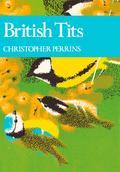
In addition to dealing with the general biology and behaviour of the birds, Dr Perrins gives full attention to such things as their social lives, their intelligence and adaptiveness, and their puzzling ability to adjust their population sizes to the future availability of food. This edition is exclusive to newnaturalists.com Because of their ubiquity and apparent boldness, the tits are among the most easily observed, and the most popular, of all British birds. The Blue Tit, particularly, is an attractive and confident bird and will arrive at a well-stocked bird table, or at a bag of peanuts outside a window, within a few minutes of its being set out. Curiously, little has been written about tits for the general naturalist. In this book, Christopher Perrins, who succeeded the late David Lack at the Edward Grey Institute of Ornithology in Oxford, sets out to remedy this omission. Dr Perrins has spent many years studying these small birds in great detail and has himself made many important discoveries about their lives and behaviour. The book deals with seven species of tit. These include the six members of the true tits - Coal, Great, Blue, Crested, Marsh and Willow Tits - as well as the more distantly related Long-tailed Tit. In addition to dealing with the general biology and behaviour of the birds, Dr Perrins gives full attention to such things as their social lives, their intelligence and adaptiveness, and their puzzling ability to adjust their population sizes to the future availability of food. Dr Perrin's study demonstrates that there is much unsuspected complexity - some of it still not clearly understood - in the lives of even the most popular of groups of birds; as such it will be of interest to every birdwatcher, amateur and professional alike.

Thumb

0 repins 0 comments

Treat never asked to be dragged across the galaxy from one survey station to another. She hates hyperspace travel and she despises being forced to get along with other unwilling "space brats."Take Rafe, for instance. There's something seriously wrong with the guy, pointing a gun at her like this. Here they are, crash-landed, adults dead, no radio, not enough food. But they're on a living world! On such a world, resourceful space brats might find food, water, shelter. In fact, they might survive. If they can deal with the aliens, and they don't kill each other either.

Thumb

0 repins 0 comments

Spinoza rejects fundamental tenets of received morality, including the notions of Providence and free will. Yet he retains rich theories of good and evil, virtue, perfection, and freedom. Building interconnected readings of Spinoza's accounts of imagination, error, and desire, Michael LeBuffe defends a comprehensive interpretation of Spinoza's enlightened vision of human excellence. Spinoza holds that what is fundamental to human morality is the fact that we find things to be good or evil, not what we take those designations to mean. When we come to understand the conditions under which we act-that is, when we come to understand the sorts of beings that we are and the ways in which we interact with things in the world-then we can recast traditional moral notions in ways that help us to attain more of what we find to be valuable. For Spinoza, we find value in greater activity. Two hazards impede the search for value. First, we need to know and acquire the means to be good. In this respect, Spinoza's theory is a great deal like Hobbes's: we strive to be active, and in order to do so we need food, security, health, and other necessary components of a decent life. There is another hazard, however, that is more subtle. On Spinoza's theory of the passions, we can misjudge our own natures and fail to understand the sorts of beings that we really are. So we can misjudge what is good and might even seek ends that are evil. Spinoza's account of human nature is thus much deeper and darker than Hobbes's: we are not well known to ourselves, and the self-knowledge that is the foundation of virtue and freedom is elusive and fragile.

Thumb

0 repins 0 comments

There can be little doubt that there are truly colossal challenges associated with providing food, fibre and energy for an expanding world population without further accelerating already rapid rates of biodiversity loss and undermining the ecosystem processes on which we all depend. These challenges are further complicated by rapid changes in climate and its additional direct impacts on agriculture, biodiversity and ecological processes. There are many different viewpoints about the best way to deal with the myriad issues associated with land use intensification and this book canvasses a number of these from different parts of the tropical and temperate world. Chapters focus on whether science can suggest new and improved approaches to reducing the conflict between productive land use and biodiversity conservation. Who should read this book? Policy makers in regional, state and federal governments, as well as scientists and the interested lay public.

Thumb

0 repins 0 comments

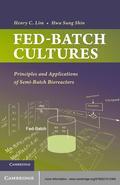
Many, if not most, industrially important fermentation and bioreactor operations are carried out in fed-batch mode, producing a wide variety of products. In spite of this, there is no single book that deals with fed-batch operations. This is the first book that presents all the necessary background material regarding the 'what, why and how' of optimal and sub-optimal fed-batch operations. Numerous examples are provided to illustrate the application of optimal fed-batch cultures. This unique book, by world experts with decades of research and industrial experience, is a must for researchers and industrial practitioners of fed-batch processes (modeling, control and optimization) in biotechnology, fermentation, food, pharmaceuticals and waste treatment industries.

Thumb

0 repins 0 comments

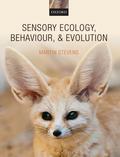
Throughout their lives animals must complete many tasks, including finding food, avoiding predators, attracting mates, and navigating through a complex and dynamic environment. Consequently, they have evolved a staggering array of sensory organs that are fundamental to survival and reproduction and shape much of their evolution and behaviour. Sensory ecology deals with how animals acquire, process, and use information in their lives, and the sensory systems involved. It investigates the type of information that is gathered by animals, how it is used in a range of behaviours, and the evolution of such traits. It deals with both mechanistic questions (e.g. how sensory receptors capture information from the environment, and how the physical attributes of the environment affect information transmission) and functional questions (e.g. the adaptive significance of the information used by the animal to make a decision). Recent research has dealt more explicitly with how sensory systems are involved with and even drive evolutionary change, including the formation of new species. Sensory Ecology, Behaviour, and Evolution provides a broad introduction to sensory ecology across a wide range of taxonomic groups, covering all the various sensory modalities (e.g. sound, visual, chemical, magnetic, and electric) relating to diverse areas spanning anti-predator strategies, foraging, mate choice, navigation and more, with the aim being to illustrate key principles and differences. This accessible textbook is suitable for senior undergraduates, graduate students, and professional academics taking courses or conducting research in sensory ecology/biology, neuroethology, behavioural and evolutionary ecology, communication, and signalling. It will also be of relevance and use to psychologists interested in sensory information and behaviour.

Thumb

0 repins 0 comments

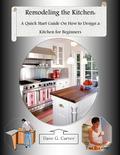
Your kitchen is where you and your family spend a great deal of time. Your kitchen is most likely the heart of your home, where meals are cooked, homework is finished, and where your family enjoys spending time together. It is often the place where friends, neighbors and family automatically gravitate, drawn by the aroma of food cooking and the warmth of the room. Your kitchen is one of the busiest rooms in your house; shouldn't it be as beautiful and functional as possible? There are many options for updating your kitchen, ranging from easily accomplished, bare-bones budget plans, to a full kitchen remodel. With a full remodel, you can do a nice job with a relatively small budget or go for a complete luxury kitchen remodel.

Thumb

0 repins 0 comments

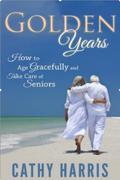
The world is aging faster than many people realize. We need to remember that from the beginning to end, life was meant to be lived with dignity using the empathy and compassion that God gives us. Everyone should greet each day as a gift to be lived, cherished and shared with those they love. You matter because you are you, and you matter until the last moment of your life. When you are told that someone you love is going to die, it's as if time skips a beat. And once the clock resumes ticking, nothing is ever the same again. My mom lived until the ripe age of 82 years old and so did her mother. So I guess you can say I am descended from a line of long-livers. However, back then things were simpler and they had access to natural foods and lived in clean environments. When my mother died, my father had passed on over 20 years earlier. My 8 siblings and I had no idea of the amount of work we needed to do. Not only did we need to make sure all her affairs were in order but we had to make sure she was comfortable during the last days of her life. If you have never experienced the pain of losing a loved one especially an elderly person in your family, then you need to keep reading this book. Due to a culture that celebrates youth and ignores the elderly, seniors and their families are largely unprepared to deal with the challenges seniors face as they age. This book is an easy-to-read guide for those who are seeking to become more knowledgeable on how to age gracefully and how to take care of the seniors in their care. In this country, seniors are treated horribly! Many countries, Hispanic or Latino countries and others, allows seniors to move in with their families as they age. This not only helps families out with childcare, but it's also a great support system for seniors. However, in this country as seniors age, we look for nursing homes (aka "old folks homes") to drop seniors off at as if these homes are some sought of elephant's graveyard. This kind of mindset has been the nor

Thumb

0 repins 0 comments

The Parent's Guide to Eating Disorders shows that effective solutions begin at home and cost little more than a healthy investment of time, effort, and love. Based on exciting new research, it differs from similar books in several key ways. Instead of concentrating on the grim, expensive hospital stays of patients with severe disorders, the authors focus on the family, teaching parents how to examine and understand their family's approach to food and body-image issues and its effect their child's behavior. Parents learn to identify an eating disorder early, to establish healthy attitudes toward food at a young age, and to intervene in a nonthreatening, nonjudgmental way. The authors concentrate on teens, the age group most often affected by eating disorders, as well as younger children. Individual chapters cover boys at risk, relapse training, dealing with friends, school, and summer camp, and much more. The book includes an appendix and sections on further reading, organizations and websites, residential and hospital programs, and references.

Thumb

0 repins 0 comments

This is the eBook version of the printed book. This Element is an excerpt from The Truth About Making Smart Decisions (9780132354639) by Robert E. Gunther. Available in print and digital formats. How to boil knowledge down to its essence-and then act on it! Michael Pollan boils down his nutritional advice to this: "Eat food. Not too much. Mostly plants." Then, he recommends against eating anything our great-great-grandmother wouldn't have eaten. Pollan offers a simple heuristic that distills three decades of research on food and nutrition into actionable principles. In dealing with complex issues, a simple heuristic for decision making can keep you from being overwhelmed by data.

Thumb

0 repins 0 comments

At a time when success is considered the epitome of life, and children have lost the joy of living their childhood by forcefully expecting them to behave like perfect adults, this book tries to give a natural interpretation of life. The well-being of human beings lies in a sound body empowered by a sound mind. This book tries to explain some aspects of life, both physical and psychological, which will help one to understand one's life. What is the implication of successive successes? Where is heaven or where is god? How does a hard working person value money? How to avoid high blood pressure or diabetes? How to behave like a parent before a child? How to maintain your body? Can we prevent the next world war? How to live a happy married life? When to show anger? Which food shall one take and how much? This book deals with such different aspects of life which will help a person to live a meaningful life. Of course, each person undergoes the same phases of experiences as experienced by his parents inspite of the wisdom acquired by his parents and forefathers through their experiences. Each one experiences life in different phases, but its attributes transcend language, religion, caste, race, geographical location etc.

Thumb

0 repins 0 comments

The discovery of biological activity associated with flavonoid contaminants in vitamin C preparations from bell peppers and lemons by Szent-Gyorgyi and his associates opened a floodgate of research into the biological functions of this ubiquitous and diverse group of compounds. Since then, a broad range of physiological and biochemical activities were discovered in living systems including most plants and animals. With the continued discovery, isolation and identification of new natural and synthetic compounds exhibiting biological activities, entire research programs are devoted to wide ranging investigations to nearly every conceivable area, from microbial and plant interaction, growth regulation and development to physiological, genetical, medicinal actions and uses in animals. This volume is based on presentations made at a Symposium, titled Flavonoids in Cell Function, held during the 219'h National Meeting of the American Chemical Society held in San Francisco, California on March 29-30, 2000. The book is not intended to be a comprehensive treatise on flavonoid research, only a sampling of recent results. The papers cover a range of topics discussing various approaches to flavonoid study, starting at plant- microbe communication through analytical methods to medicinal and systemic implications of these compounds in animal cells and systems. The organizers would like to express their thanks to Cargill Foods, Inc, Minneapolis, Minnesota and the Division of Agricultural and Food Chemistry of the American Chemical Society for financial support. A great deal of thanks is also due to the authors without whose cooperation and patience this volume would not be realized.

Thumb

0 repins 0 comments

Advances in Agronomy continues to be recognized as a leading reference and a first-rate source of the latest research in agronomy. Major reviews deal with the current topics of interest to agronomists, as well as crop and soil scientists. As always, the subjects covered are varied and exemplary of the myriad subject matter dealt with by this long-running serial. Editor Donald Sparks, former president of the Soil Science Society of America and current president of the International Union of Soil Science, is the S. Hallock du Pont Chair of Plant and Soil Sciences at The University of Delaware. Volume 82 contains eight state-of-the-art reviews on topics of interest in the plant and soil sciences. Three of the reviews present cutting-edge molecular scale techniques and approaches that directly impact food production, crop improvement, and environmental quality and sustainability.

Thumb

0 repins 0 comments

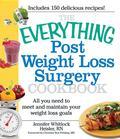
For weight-loss surgery (WLS) patients, the hard work has only just begun when they return from the operation. That is when they deal with potential complications from surgery, the emotions that come after WLS, getting enough exercise to keep off the weight, and eating the correct portions of nutritious, low-fat foods. The Everything Guide to Post-Weight Loss Surgery guides them through it all. Included are 150 delicious recipes like: Very Berry Smoothie Seared Tuna and White Bean Salad Chicken and Roasted Vegetable Quesadillas Pork Tenderloin with Cherry Sauce Berry Cheese Blintzes In this helpful manual, surgical nurse Jennifer Heisler presents readers with all the facts they need to recover from WLS the healthy way. Whether questioning what comes next or dealing firsthand with complications, readers find comfort and practical advice in this one-stop resource.

Thumb

0 repins 0 comments

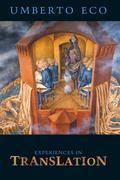
In this book Umberto Eco argues that translation is not about comparing two languages, but about the interpretation of a text in two different languages, thus involving a shift between cultures. An author whose works have appeared in many languages, Eco is also the translator of Gérard de Nerval's Sylvie and Raymond Queneau's Exercices de style from French into Italian. In Experiences in Translation he draws on his substantial practical experience to identify and discuss some central problems of translation. As he convincingly demonstrates, a translation can express an evident deep sense of a text even when violating both lexical and referential faithfulness. Depicting translation as a semiotic task, he uses a wide range of source materials as illustration: the translations of his own and other novels, translations of the dialogue of American films into Italian, and various versions of the Bible. In the second part of his study he deals with translation theories proposed by Jakobson, Steiner, Peirce, and others. Overall, Eco identifies the different types of interpretive acts that count as translation. An enticing new typology emerges, based on his insistence on a common-sense approach and the necessity of taking a critical stance.

Thumb

0 repins 0 comments

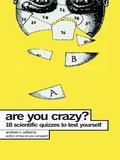
There is a fine line between quirky and out-and-out crazy. With 18 scientifically based quizzes, Andrew N. Williams helps readers decipher whether they're "normal," toeing the line, or far past it. Developed by psychologists to analyze human behavior, the quizzes allow readers to discover if they (or their friends and family) are: - Sex addicts- Obsessive-compulsives- Food freaks- Thrill-seekers- Hypochondriacs- Fetishists- Paranoids- Imposters Plus the book includes descriptions, in layman's terms, of more than 80 specific quirks, illustrated with real life examples. Readers will marvel at stories of people who: - Crave dirt-and eat it by the handful- Are afraid of doughnuts because they can't see what's inside- Lie about deaths in the family-to collect sympathy cards But Are You Crazy? is much more than a party game, offering helpful insights for dealing with other peoples' crazy behavior as well as one's own insecurities and phobias.

Thumb

0 repins 0 comments

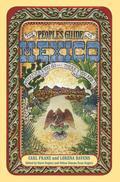
Over the past 35 years, hundreds of thousands of readers have agreed: This is the classic guide to "living, traveling, and taking things as they come" in Mexico. Now in its updated 14th edition, The People's Guide to Mexico still offers the ideal combination of basic travel information, entertaining stories, and friendly guidance about everything from driving in Mexico City to hanging a hammock to bartering at the local mercado. Features include: Advice on planning your trip, where to go, and how to get around once you're there Practical tips to help you stay healthy and safe, deal with red tape, change money, send email, letters and packages, use the telephone, do laundry, order food, speak like a local, and more Well-informed insight into Mexican culture, and hints for enjoying traditional fiestas and celebrations The most complete information available on Mexican Internet resources, book and map reviews, and other info sources for travelers

Thumb

0 repins 0 comments

Adverse drug reactions and interactions are still a major headache for healthcare professionals around the world. The US Food and Drug Administration's database recorded almost 300,000 serious adverse events in 2009 alone, of which 45,000 instances proved fatal. This updated new edition of the indispensable guide to drug interactions incorporates fresh research completed since the book's original publication by Humana Press in 2004. Additions include a new section on pharmacogenomics, a rapidly growing field that explores the genetic basis for the variability of responses to drugs. This new material reviews important polymorphisms in drug metabolizing enzymes and applies the findings to forensic interpretation, using case studies involving opiates as exemplars. Existing chapters from the first edition have in most cases been updated and reworked to reflect new data or incorporate better tables and diagrams, as well as to include recent drugs and formulations. Recent references have been inserted too. The handbook features extra material on illicit drug use, with a new chapter tackling the subject that covers cocaine, amphetamines and cannabis, among others. The section on the central nervous system also deals with a number of drugs that are abused illicitly, such as benzodiazepines, opiates flunitrazepam and GHB, while so-called 'social' drugs such as alcohol and nicotine are still discussed in the book's section on environmental and social pharmacology. Focusing as before on detailed explanation and incorporating both pharmacokinetic and pharmacodynamic drug interactions, this book will continue to be a lodestar for health and forensic professionals as well as students.

Thumb

0 repins 0 comments

Next Page